The Emerging E-Paper Devices: Promising More than E-Readers
Introduction
Most of the time, when we hear the term ‘e-paper,’ we think of an Amazon Kindle or other e-readers designed to satisfy book lovers. However, in 2025, e-paper technology has expanded significantly beyond that. It is now being implemented in bright notebooks, laptops, signage, and even wearable technology. This silent revolution is transforming the ways we read, write, and communicate with digital information without overworking our eyes or overloading our batteries.
What Exactly Is E-Paper?
Electronic paper, also known as e-paper, is a special display that resembles paper and weighs similarly to paper. E-paper, instead of emitting light to your eyes (as phone screens do), reflects it, similar to a book page. That is why one can read it even in the sunshine.
Electronic ink or e-ink is the secret behind e-paper. The tiny capsules contain black and white particles that are moved about by electricity to create words and images. The best part? After something is displayed, it remains on the screen using no additional power, making e-paper very energy-efficient.
Between E-Readers and Everyday Devices.
Over the years, the usage of e-paper has been limited to gadgets such as the Kindle or Kobo. Still, companies are finding numerous new applications today. E-paper tablets like the reMarkable two and Boox Tab Ultra allow users to take handwritten notes, draw, and arrange digital journals without feeling like they are writing on real paper.
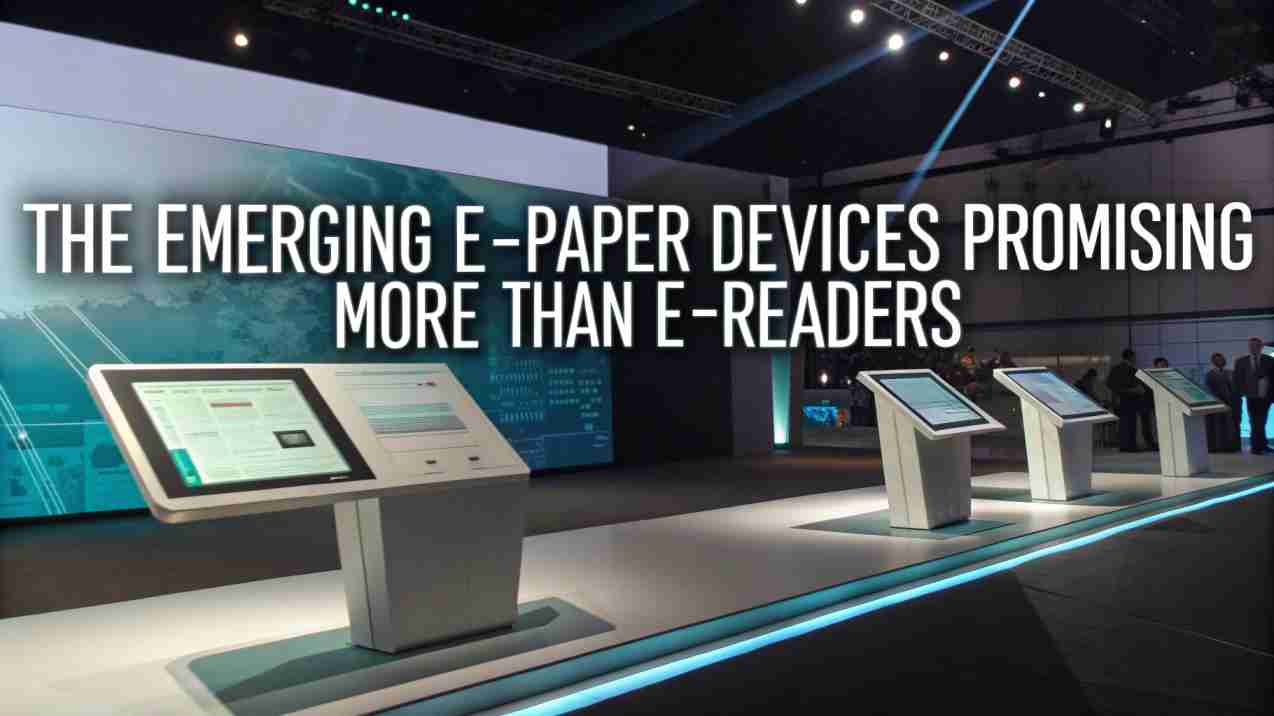
E-paper posters are replacing printed posters in stores and offices. Not only can they modify content on the fly, but they also save trees and ink. There are even smartwatches that rely on e-paper screens to last days or weeks. Even e-paper laptops are being developed, which focus on reading, writing, and working without eye strain and distractions.
Why E-Paper Is So Popular
There are several huge benefits that e-paper has:
Energy Efficient: Consumes very little power, thus batteries last longer.
Easy on the Eyes: The eyes find it easy to read, even in the long hours.
Green: Less wastage of paper and ink contamination.
Legible in the sun: Can be read in broad daylight.
To students, writers, and other professionals, e-paper devices provide a quiet, distraction-free experience, with no blinking screens and no pop-ups.
Limitations and Challenges
Naturally, e-paper is not ideal. The greatest difficulty is color. Although some new e-paper displays can display colors, they are not as bright and sharp as traditional LCD or OLED screens. Speed is another issue; e-paper does not refresh quickly, which is suboptimal for videos and rapid animation.
Nevertheless, with the advancement in technology, these problems are gradually fading away. Companies are already testing flexible e-ink and color e-ink that can bend and fold.
The Future of E-Paper
E-paper’s future looks bright. In the near future, we may have e-paper newspapers that refresh themselves, e-paper keyboards, and smart walls that display artwork or messages, consuming almost no power. As the world becomes increasingly eco-friendly, e-paper may help develop more environmentally friendly and intelligent technologies.
Conclusion
E-paper began as a relatively basic method for reading paperless books, but it is evolving into much more than that. It is silent, environmentally sustainable, and designed to concentrate, a combination uncommon in our screen-laden world. Going viral in other devices and industries, e-paper is demonstrating that sometimes the best technology doesn’t scream; it just does its job.