
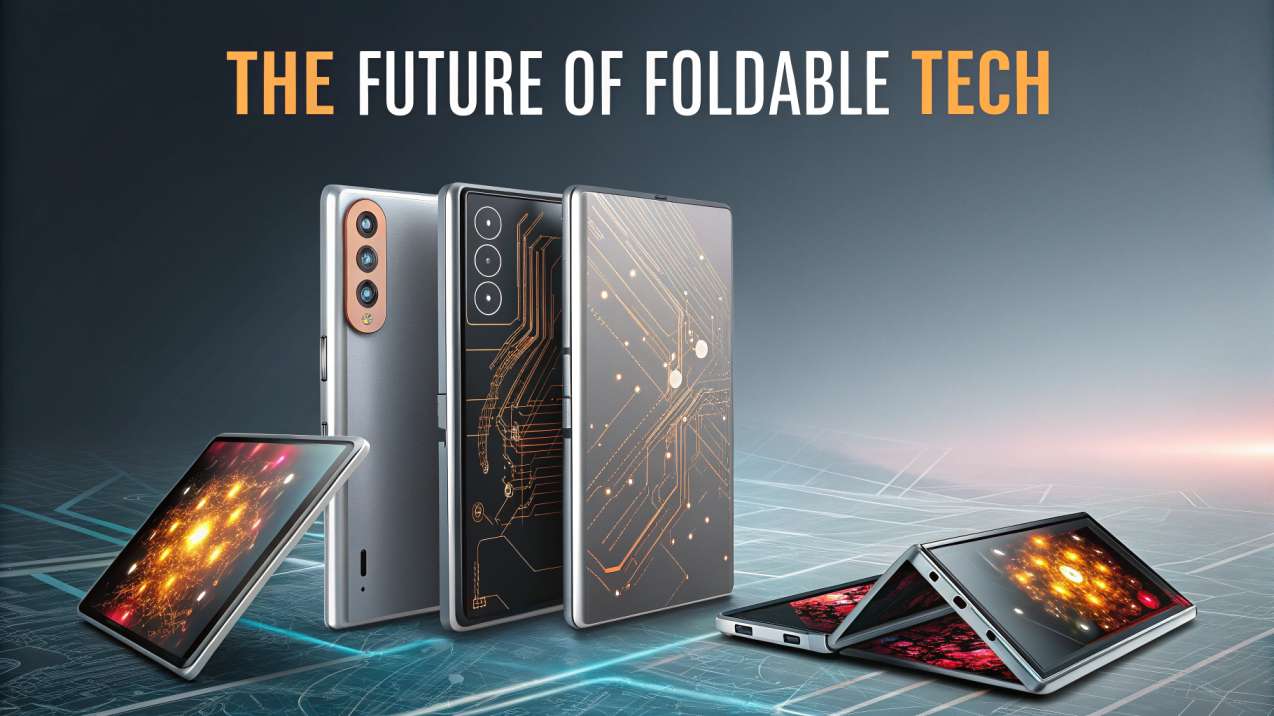
The Future of Foldable Tech
Technology still amazes us and in the recent years, one of the most curious things is the foldable technology. An imaginary fantasy just a few years ago was a folding phone or tablet. It is a fact today–and becoming more and more true. Samsung, Motorola, and Huawei are the top brands, who cannot convince the world that flexible screens are the next generation. And are we prepared to welcome this new generation of gadget?
The Journey So Far
The beginnings of foldable tech are with the primitive technologies of flip phones. The current foldables have bendable OLED screens that bend without fracturing. The first models, such as Galaxy Fold by Samsung, were not without their share of issues related to the vulnerability of screens and visible folds. The latter are, though, the more powerful, sleeker and practical. Design and usability are pushing boundaries, and businesses are learning out of their initial errors.
Why Foldable Tech Is Cool.
Foldables make sense as they are portable and powerful. Then transfer them to a phone, and fold them into a tablet size to watch a movie, play a game, or work. The online book can be read on a mini screen, which can extend at random intervals!
They also make it easy to multitask, enabling users to open several applications at once, drag and drop files or even use a stylus to draw. Foldables are new and will be of interest to anyone who values style and functionality.
The Challenges Hiding It Down.
Of course not everything made of foldable technology is perfect. The price is a big concern. Foldable phones are a luxury product which is mostly more costly than standard phones. And then there is the problem of durability – hinges tear and bend and screens are more delicate than glass screens.
The depth and the battery life matter also. These devices are folded and carry more weight, not to mention that having two or more screens is more energy-consuming. These limitations may slow down mainstream adoption until even more early advancements in technology.
Beyond Phones: What’s Next?
Turns out the technology of folds is not exclusive to smartphones. Business departments are testing foldable laptops, tablets and even televisions. Consider a folding TV when it is not in use or a laptop that doubles as a book. These ideas can revolutionize how we use and store devices.
Wearable foldables, or gadgets that can be worn around the wrist or embedded into clothing, are also rumored. The potential uses are nearly limitless, with flexible screens in cars and paper-thin screens in school and at work.
Conclusion:
Folding is a new technology that is still in its nascent stages and we are confident that one day in the digital age, we will be able to bend. This new form of gadget will be enjoyed by more people since its prices will be lower and it will have a longer life. Foldables are, as of now, a glimpse into the future, when our display will bend, twist, and move with us.
Foldable technology will not be a question but when. And, when it does, we would never have the same look of our devices ever again.